



The Vietnam tariff rate announced by the U.S. reaches 46%, putting significant pressure on Vietnam’s export-driven supply chains.
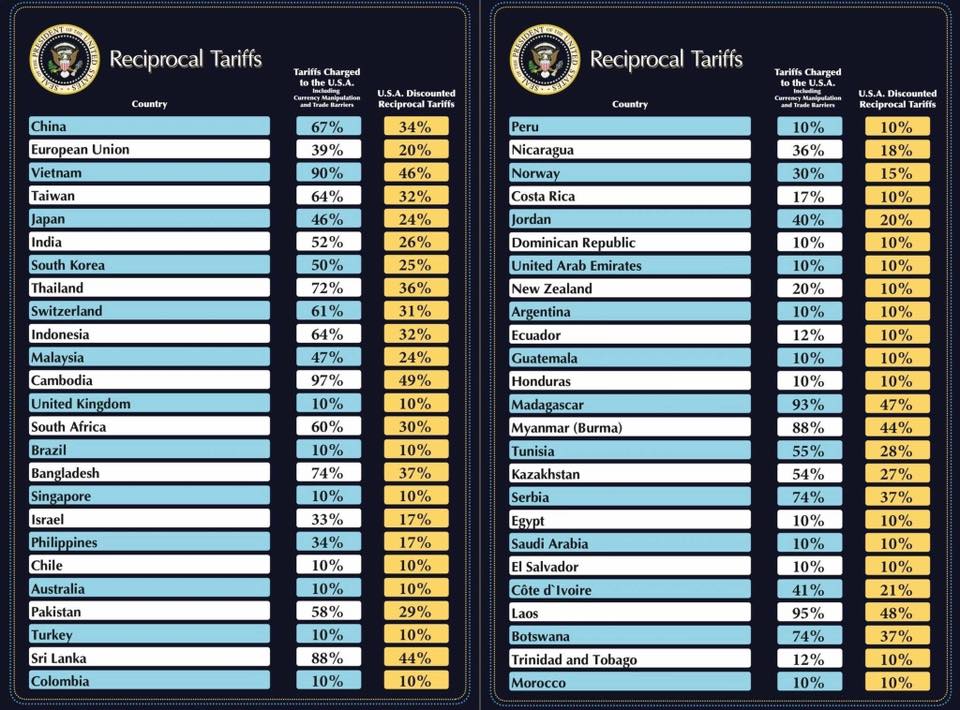
On April 2, 2025, President Donald Trump announced and implemented new tariffs, which he stated were aimed at ensuring the economic independence of the United States. According to the new policy, a 10% import tariff will be applied to all countries and economies worldwide, effective from April 5, with additional tariffs coming into effect on April 9.
Vietnam is among the countries with the highest tariffs, at 46%, while Laos faces a 48% tariff and Cambodia up to 49%. China, which had already been subject to a 20% tariff, will now face an additional 34%, bringing the total tariff to 54%. Canada and Mexico, the two largest trade partners of the U.S., have already been subject to a 25% tariff on many goods and will not face any additional tariffs as announced on April 2.
Vietnam’s textile, electronics, footwear, furniture, and other consumer goods industries will face significant negative impacts from these tariffs. However, the White House announced that tariffs will not apply to certain goods, such as copper, pharmaceuticals, semiconductors, wood, gold, energy, and certain minerals not found in the U.S.
The imposition of a 46% tariff on exports from Vietnam will create widespread challenges and difficulties for global supply chains and logistics. While industries such as electronics and machinery might shift production to other economies, the textile industry faces fewer alternatives. Export companies and Vietnamese businesses will struggle with disruptions in their supply chains, as finding alternative sources and shifting production could be complex and time-consuming. This could also cause Vietnam to lose its competitive pricing advantage compared to other countries, affecting its position in the global market.
Adapting to the Vietnam Tariff Rate Change
Businesses affected by the new Vietnam tariff rate may need to review sourcing and routing; iSolution Logistics supports customs brokerage and clearance planning during periods of trade policy change.
Contact us directly via WhatsApp, Zalo, or Facebook Messenger for immediate assistance